Argos Town Designs for Secret Level
The Outer Worlds: The Company We Keep
Argos Town was never meant to feel like a heroic sci-fi settlement. I approached it as a place that still functions on the surface, but emotionally feels exhausted, polluted and slowly forgotten.
I created concept art and visual development for Argos Town and the security room in Secret Level, The Outer Worlds: The Company We Keep. The work started from the emotional tone of the sequence: a corporate frontier town shaped by labor, poverty, extraction and quiet decay.
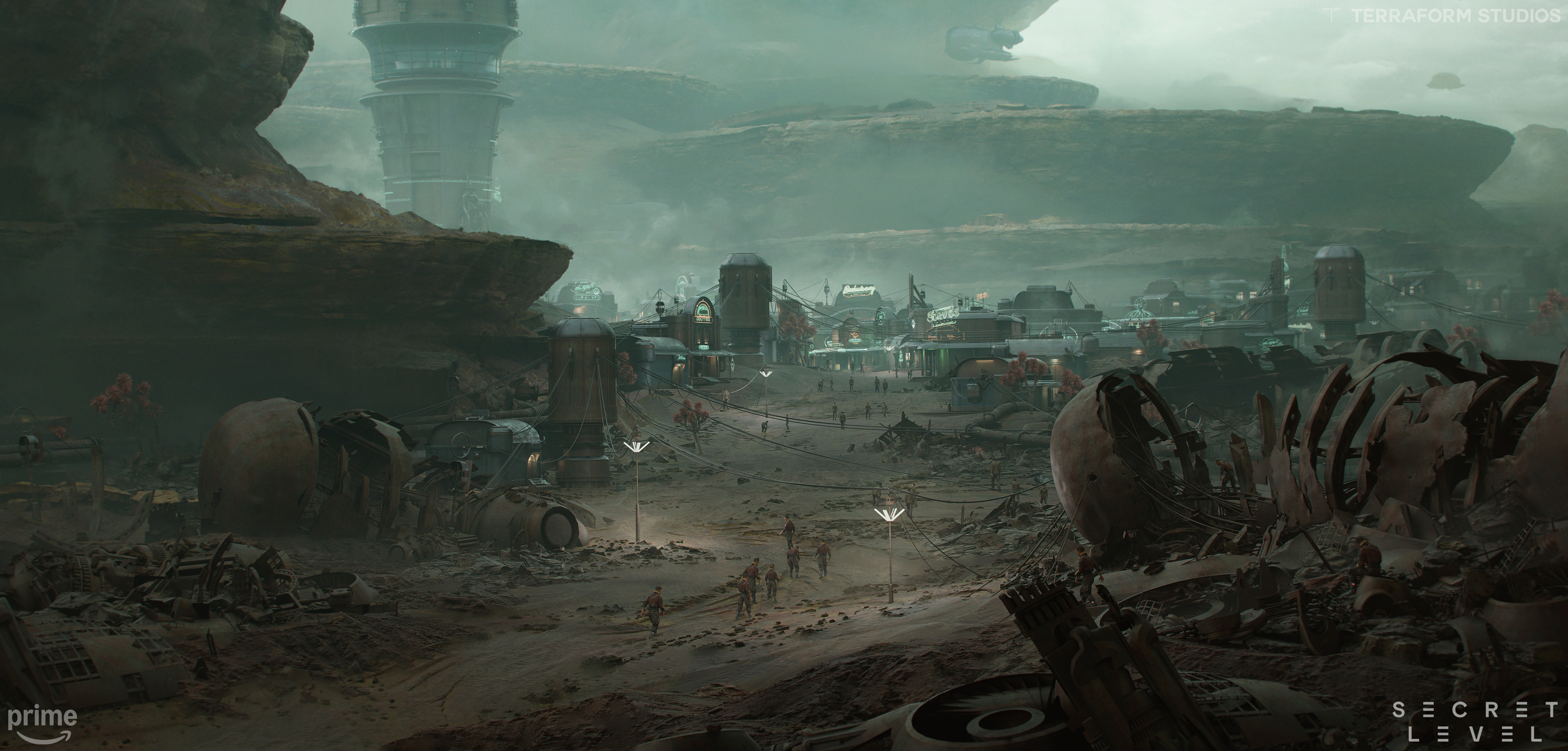 Argos Town, final concept design
From Script to Emotional Map
Before thinking about individual structures, I tried to understand the emotional pressure of the place. The scene was set on a polluted planet, in a mining town where workers return from exhausting labor. The world had to carry the feeling of corporate control, poverty and routine survival.
The key question for me was simple: what would I feel if I lived here, if I was one of those people walking back through the town every day?
Designing a Town That Feels Used Up
For Argos Town, I wanted the environment to feel populated, but not hopeful. There are roads, lights, buildings and people moving through the space, but the town itself feels tired. It feels like a place that keeps working because it has to, not because there is any future in it.
I treated the industrial debris around the town almost like dead architecture. Broken ship parts, tanks and large metal shells were cut open and arranged in a way that could suggest ribs, carcasses and old machinery left to rot in the landscape. I did not want the decay to feel decorative. I wanted it to feel like the town had absorbed years of labor, waste and neglect.
Layout and Value Explorations
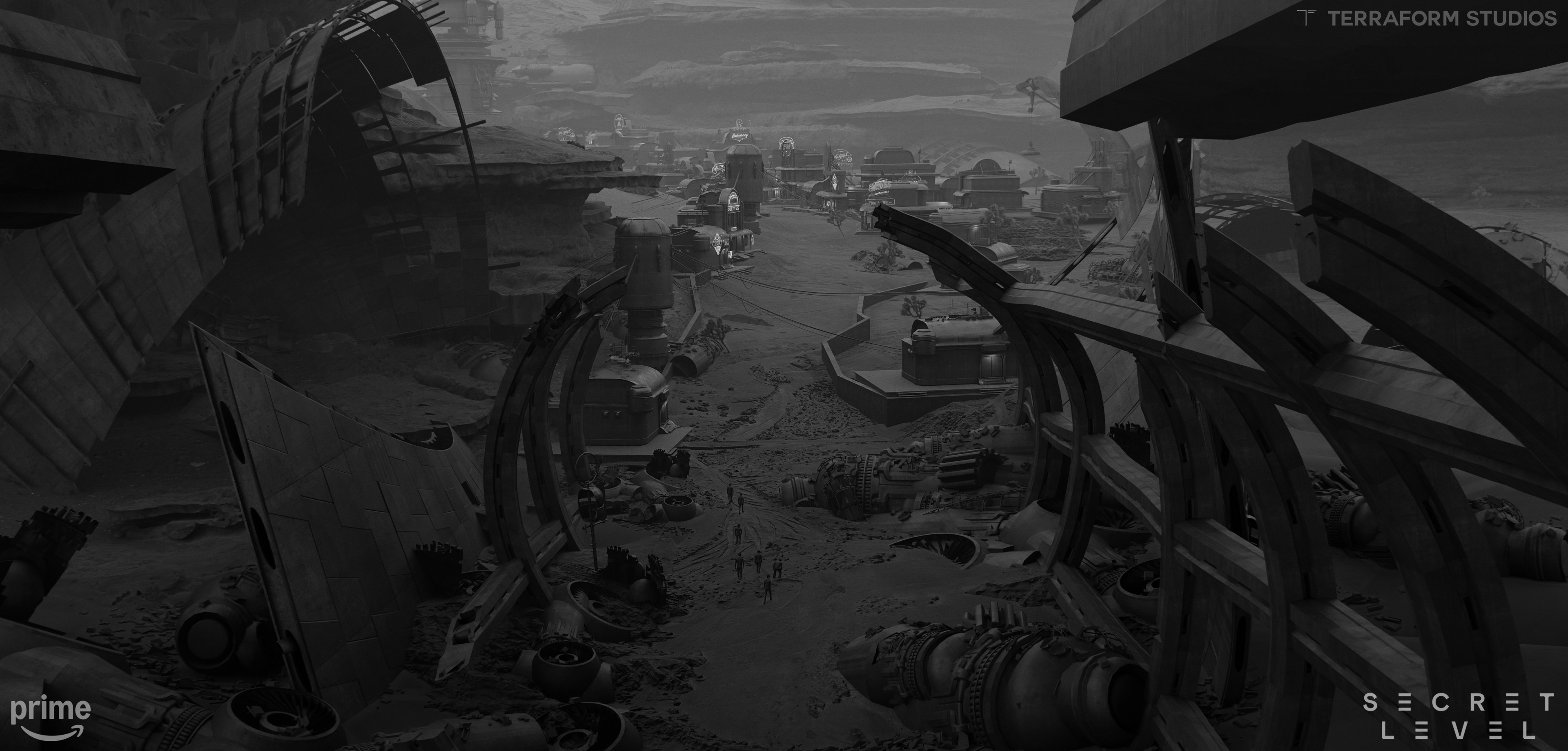
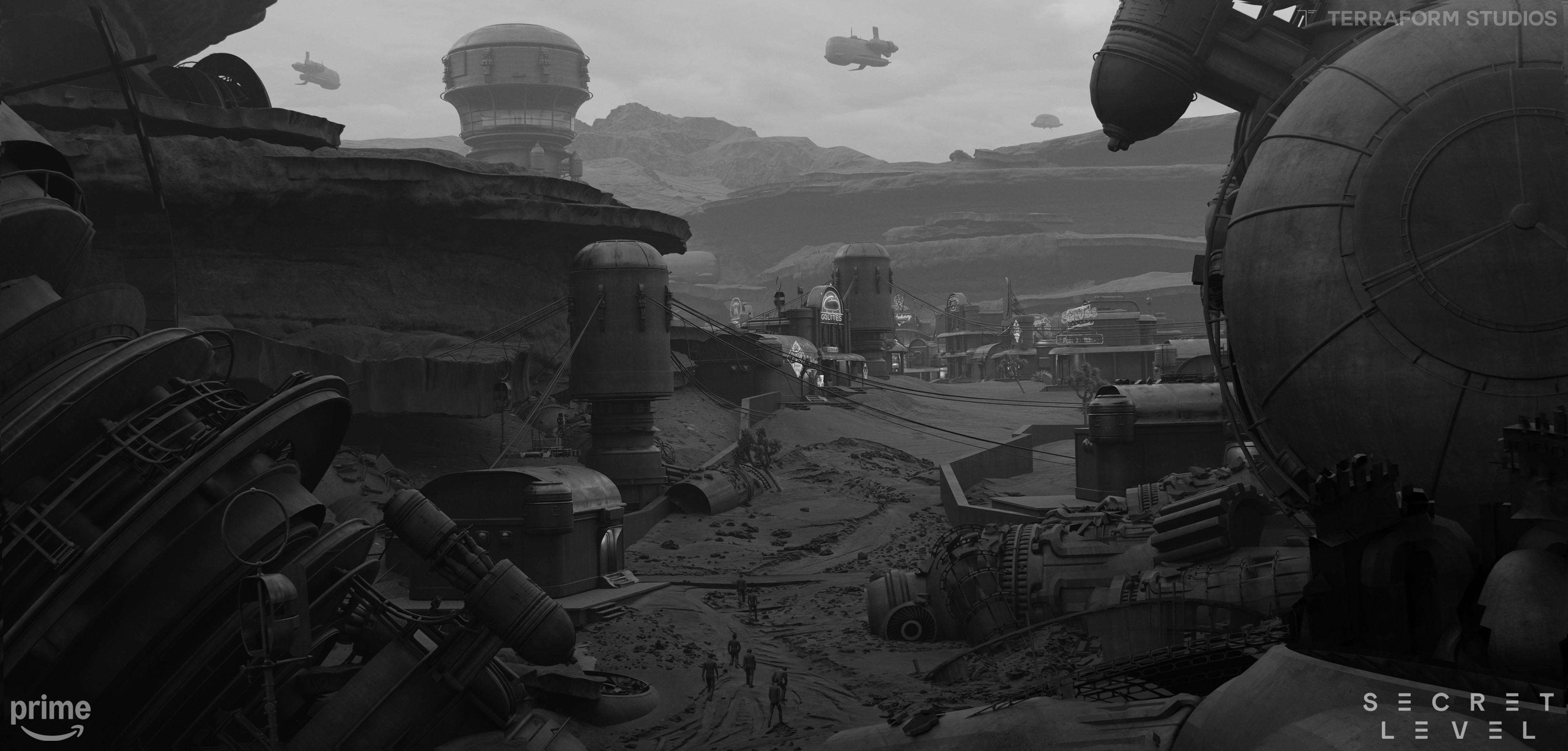
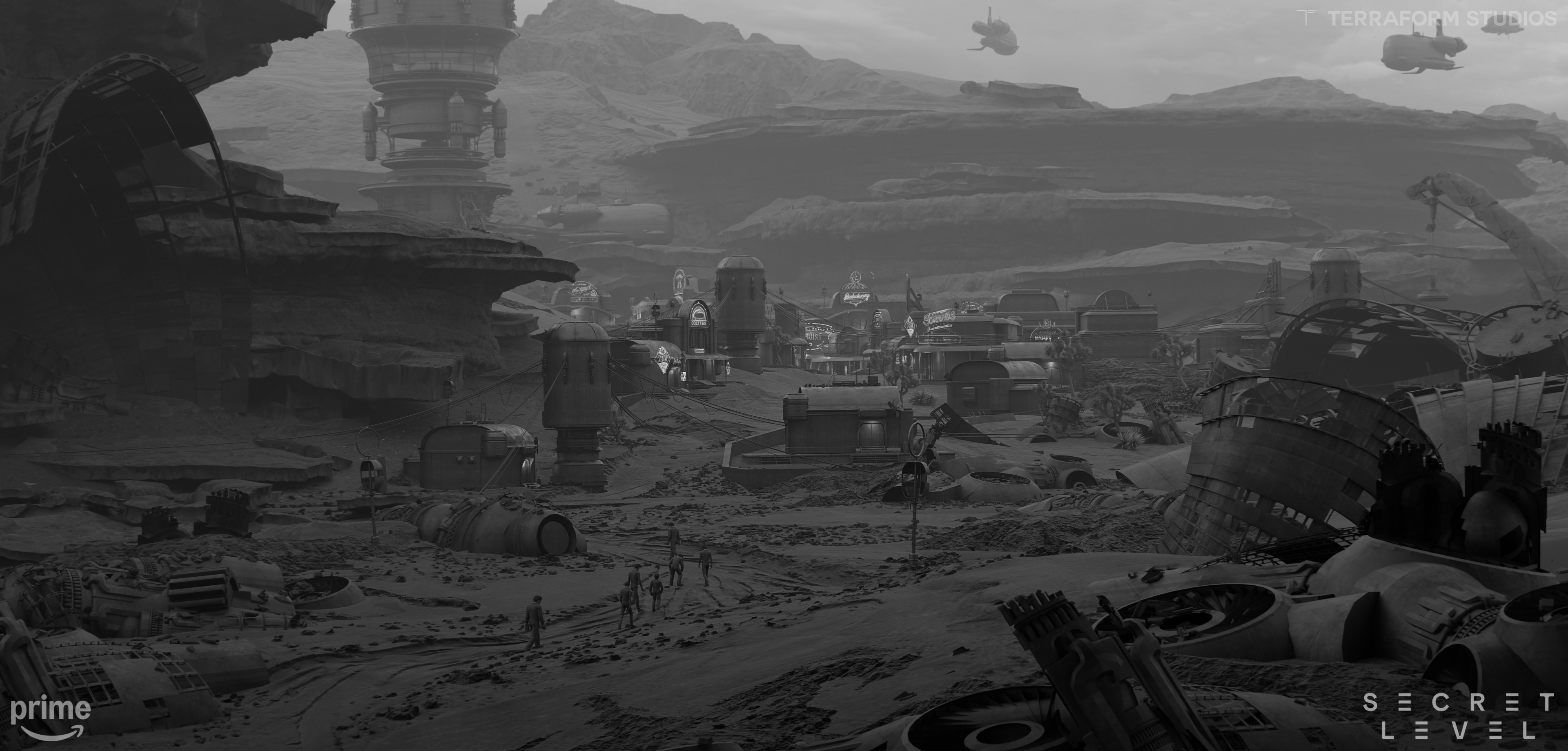
The black-and-white passes were used to search for scale, value structure and the feeling of the town before pushing the final color. At this stage, the main question was not detail, but pressure: how small the people should feel, how heavy the cliffs should be, and how much of the town should disappear into dust and haze.
Color, Dirt and Quiet Collapse
The palette was built around muted green, brown and gray tones. I wanted the color to feel polluted and slightly sick, but not theatrical. The town still needed to feel believable, so the mood had to come from restrained choices: dirty atmosphere, weak light, cold haze, rusted surfaces and small signs of human presence.
A lot of the image was about balancing two ideas: life and collapse. The town is not abandoned. People still live and work there. But emotionally, it feels like a place where everything has already been spent.
The Security Room
The security room explored a different side of the same world. If Argos Town was about public exhaustion, this interior was about control.
I mixed sci-fi control systems with older submarine and industrial design language. I wanted the room to feel functional, enclosed and slightly oppressive, with dense panels, old screens, cables and a central desk that feels more like a command object than a piece of furniture.
The goal was not clean technology. It was technology shaped by surveillance, pressure and bureaucracy.
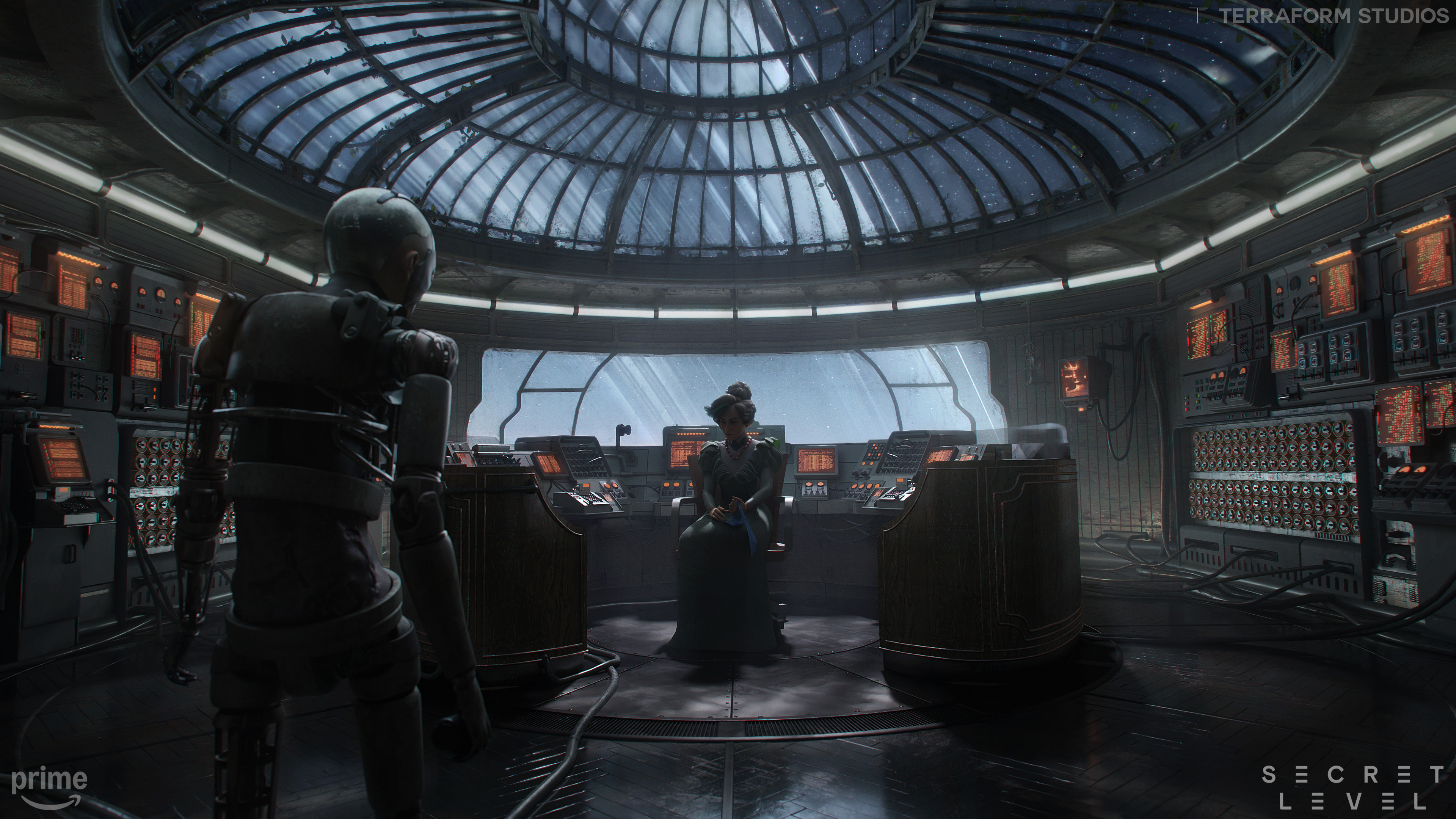 Security Room, interior design